





Important Dates
July 4, 2025 - Deadline for full papers
Aug 1, 2025 - Notification of acceptance
Aug 31, 2025 - Final paper submission
Technical Sponsors




Sponsors / Exhibitors



Keynote Speeches

Abstract: Modeling and Simulation (ModSim) have become essential tools in science and engineering, enabling the precise analysis and prediction of complex systems. In Computational Electromagnetics (CEM), these techniques have advanced significantly over the past six decades, addressing increasingly sophisticated challenges and driving innovation across various industries. CEM plays a pivotal role in the design and optimization of modern electromagnetic systems. Emerging technologies, such as 5G and beyond, metasurfaces, and quantum devices, present new challenges in modeling multiscale, multiphysics, and electrically large systems. Accurate simulation of these systems requires efficient handling of billions of unknowns and the incorporation of various physical effects, demanding innovative methodologies.
Overcoming these challenges necessitates the development of hybrid numerical methods, problem decomposition strategies, and parallelization techniques optimized for advanced computing architectures. Recent hardware advancements, including Graphics Processing Units (GPUs) and specialized computational platforms, have further revolutionized the computational capabilities of CEM. Additionally, the integration of machine learning (ML) into CEM workflows has emerged as a transformative approach, offering the potential to accelerate simulations, optimize resources, and enhance accuracy.
This keynote presentation explores the latest advancements in electromagnetic modeling and simulation, with a focus on numerical methods, their challenges, and future directions. It will highlight the critical role of interdisciplinary collaboration in addressing emerging complexities and driving innovation in the field. By combining advanced numerical methods, ML, and high-performance computing, the next generation of CEM tools can significantly enhance the accuracy and efficiency of simulations, enabling breakthroughs in fields ranging from telecommunications to quantum technologies.
Overcoming these challenges necessitates the development of hybrid numerical methods, problem decomposition strategies, and parallelization techniques optimized for advanced computing architectures. Recent hardware advancements, including Graphics Processing Units (GPUs) and specialized computational platforms, have further revolutionized the computational capabilities of CEM. Additionally, the integration of machine learning (ML) into CEM workflows has emerged as a transformative approach, offering the potential to accelerate simulations, optimize resources, and enhance accuracy.
This keynote presentation explores the latest advancements in electromagnetic modeling and simulation, with a focus on numerical methods, their challenges, and future directions. It will highlight the critical role of interdisciplinary collaboration in addressing emerging complexities and driving innovation in the field. By combining advanced numerical methods, ML, and high-performance computing, the next generation of CEM tools can significantly enhance the accuracy and efficiency of simulations, enabling breakthroughs in fields ranging from telecommunications to quantum technologies.
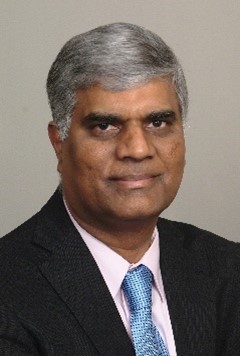
Dr.C.J.Reddy
Electromagnetic Compatibility Simulations for
Air, Sea, and Ground Platforms
Click here to download
Abstract: Electromagnetic compatibility (EMC) is a critical part of platform design in the defense industry. Numerical simulation for EMC problems - such as radiation or crosstalk at cable harnesses - can help to identify and analyze potential EMC issues at an early stage and find corrective actions. This talk will present simulation methodologies involved for identification and mitigation of such EMC issues. When designing complex systems, compliance with electromagnetic radiation hazard standards (e.g., ICNIRP 2020) must be ensured. This talk will also describe methods for shielding effectiveness analysis as well as the hazards of electromagnetic radiation to personnel (HERP), ordnance (HERO), and fuel (HERF) and how this can be mitigated through numerical simulations.

Dr.Siddik B. Yarman
Design of Matching Networks and Microwave Amplifiers
Employing the Unified Real Frequency Technique
Click here to download
Abstract: In this talk, the Unified Real Frequency Technique (URFT) to design matching networks and microwave amplifiers is introduced. The prime issue is to construct a lossless matching network under complex impedance terminations. This problem is called the double matching problem (DM). If the matching problem is between a resistive and a complex impedance termination, it is called a single matching (SM) problem. If both terminations are resistive, then, one faces a filter problem. In essence, design of a single stage microwave amplifier requires designing front-end [F] and back-end [B] matching networks in a sequential manner. Likewise, in addition to [F] and [B], design of a multistage microwave amplifier requires the design of interstage matching networks [I_j] consecutively between active devices. At the end, several examples to demonstrate the utilization of the Unified Real Frequency Technique including “Design of a 20 MHz-100 MHz antenna matching network for military applications” will be presented.
Abstract:Electromagnetic compatibility (EMC) has been a recognized part of engineering practice since the 1950s. Before that time, there was little incentive to address EMC. Electromagnetic interference (EMI) was regarded as an occasional nuisance, as when atmospheric storms would cause crackling noise in AM broadcast receivers. In 1954, military leaders sponsored the first of a series of conferences held to address what was then called radiofrequency interference (RFI). The sponsors and the engineers attending the conferences recognized the risk posed by interference. The 70 years since then have seen the growth of high-speed digital circuitry, wireless technology, and vastly expanded spectrum use. Because so much of our modern life depends on uncorrupted electronic operation, EMC has an urgency far beyond resolving a simple radio nuisance. EMC engineers are in a position to raise EMC awareness so that both the technical and non-technical population can understand EMC’s importance and value. This presentation will touch on some EMC history and how our dependence on electronic and wireless devices shapes commerce, communication, and public safety.
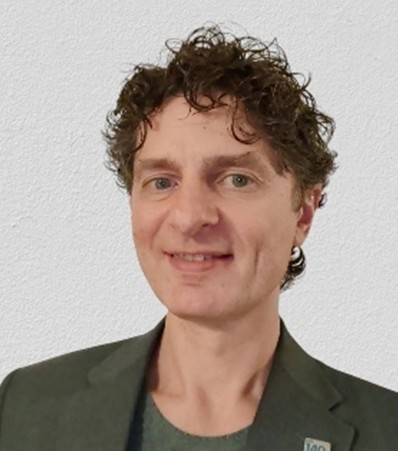
Luca Catarinucci
Zero-Power RFID-Inspired Sensing: Historical Overview,
3D Printing Innovations, and Future Opportunities
Click here to download
Abstract:This talk will delve into the significant strides and promising future of RFID-Sensing, designed to encourage young researchers to explore the dynamic fields of RFID and RFID-Sensing. Drawing from broad research initiatives at the Department of Innovation Engineering at the University of Salento, this presentation will highlight key developments in UHF RFID technology integration with sensors over the past decade and a half, and sketch out some future directions in emerging technologies.
We will start with an overview of the progression from basic multi-ID systems to advanced, self-sustaining RFID platforms that incorporate enhanced sensing and computational functions. The discussion will touch upon groundbreaking concepts like utilizing antenna/chip mismatching for zero-power sensing of diverse parameters, while underscoring the practical applications that have emerged within the Internet of Things (IoT) ecosystem thanks to these innovations.
The session will also examine the integration of RFID-sensing into emerging technological landscapes, including initial experiments with zero-power, RFID-inspired backscattering modulation at higher frequencies. These innovations are poised to improve identification and sensing capabilities across ubiquitous technology frameworks.
A focal point of the presentation will be recent advancements in reducing the costs of RFID/IoT devices through 3D printing techniques. These developments not only enhance manufacturing efficiency but also pave the way for further research and practical applications across various industries.
We will start with an overview of the progression from basic multi-ID systems to advanced, self-sustaining RFID platforms that incorporate enhanced sensing and computational functions. The discussion will touch upon groundbreaking concepts like utilizing antenna/chip mismatching for zero-power sensing of diverse parameters, while underscoring the practical applications that have emerged within the Internet of Things (IoT) ecosystem thanks to these innovations.
The session will also examine the integration of RFID-sensing into emerging technological landscapes, including initial experiments with zero-power, RFID-inspired backscattering modulation at higher frequencies. These innovations are poised to improve identification and sensing capabilities across ubiquitous technology frameworks.
A focal point of the presentation will be recent advancements in reducing the costs of RFID/IoT devices through 3D printing techniques. These developments not only enhance manufacturing efficiency but also pave the way for further research and practical applications across various industries.

Luigi Boccia
The Role of millimeter-wave Beamforming and
Integration Technologies on Non-Terrestrial Network
Click here to download
Abstract:This presentation explores the critical technologies underpinning the next generation of global communication. The talk posits that Non-Terrestrial Networks (NTNs), which utilize satellites and
other aerial platforms, are becoming a core part of our communication infrastructure to meet the growing demand for ubiquitous, high-bandwidth connectivity.
A central challenge highlighted is the significant infrastructural cost required to build these systems. The presentation identifies millimeter-wave (mm-wave) phased array antennas as a foundational technology for enabling the directive, dynamic communication links that NTNs require. It examines the key design choices and trade-offs, including various beamforming architectures such as analog, digital, and hybrid.
A significant focus is placed on integration domains—Printed Circuit Board (PCB), package, and chip (MMIC)—arguing that the ability to increase circuit density is crucial for reducing costs and managing the complexity of advanced mm-wave systems. To illustrate these principles, the lecture presents numerous examples, including currently available commercial user terminals, the historical cost reduction of Transmit/Receive (T/R) modules, and state-of-the-art integrated circuits for SatCom applications. Looking ahead, the presentation identifies NTNs as a key component of future 6G system architectures. It concludes that further innovation is necessary to reduce costs and power consumption. This will be achieved through the development of new beamforming architectures, improved component efficiency, and a reduction in the overall complexity of hardware design.
A central challenge highlighted is the significant infrastructural cost required to build these systems. The presentation identifies millimeter-wave (mm-wave) phased array antennas as a foundational technology for enabling the directive, dynamic communication links that NTNs require. It examines the key design choices and trade-offs, including various beamforming architectures such as analog, digital, and hybrid.
A significant focus is placed on integration domains—Printed Circuit Board (PCB), package, and chip (MMIC)—arguing that the ability to increase circuit density is crucial for reducing costs and managing the complexity of advanced mm-wave systems. To illustrate these principles, the lecture presents numerous examples, including currently available commercial user terminals, the historical cost reduction of Transmit/Receive (T/R) modules, and state-of-the-art integrated circuits for SatCom applications. Looking ahead, the presentation identifies NTNs as a key component of future 6G system architectures. It concludes that further innovation is necessary to reduce costs and power consumption. This will be achieved through the development of new beamforming architectures, improved component efficiency, and a reduction in the overall complexity of hardware design.
Latest News
Opening Speech
IEEE AP-S 2025 President-Elect, IEEE Fellow, Dr. C.J. Reddy, Vice President Business Development, Electromagnetics - Americas, will deliver one of the opening speeches of EMC TURKIYE 2025.
IEEE EMC-S President-Elect Tom Braxton, retired Member of Technical Staff at Bell Laboratories/Lucent Technologies and retired Project Engineer at Shure Incorporated, USA will deliver an Opening Speech in EMC TURKIYE 2025.
Keynote Speakers

Dr. Ozlem Ozgun (click for bio.)
Hacettepe University
Department of Electrical & Electronics Engineering
ozlem.ozgun@hacettepe.edu.tr
Hacettepe University
Department of Electrical & Electronics Engineering
ozlem.ozgun@hacettepe.edu.tr
Dr. C.J. Reddy (click for bio.)
Vice President – Business Development (Electromagnetics)
Altair, USA
cjreddy@altair.com
Vice President – Business Development (Electromagnetics)
Altair, USA
cjreddy@altair.com

Tom Broxton (click for bio.)
IEEE Life Senior Member
2025 President-Elect / IEEE EMC – S
tbraxton@sbcglobal.net
IEEE Life Senior Member
2025 President-Elect / IEEE EMC – S
tbraxton@sbcglobal.net
Luca Catarinucci (click for bio.)
“IEEE RFID Council President-Elect
University of Salento
luca.catarinucci@unisalento.it
“IEEE RFID Council President-Elect
University of Salento
luca.catarinucci@unisalento.it
Luigi Boccia(click for bio.)
“IEEE MTT DL (2024 – 2026)
Millimeter-wave Antennas and Integrated Circuit Laboratory (MAIC LAB)
Department of Information Technology, Modeling, Electronics and Systems Engineering – DIMES
Università della Calabria, Rende - Italy
luigi.boccia@unical.it
“IEEE MTT DL (2024 – 2026)
Millimeter-wave Antennas and Integrated Circuit Laboratory (MAIC LAB)
Department of Information Technology, Modeling, Electronics and Systems Engineering – DIMES
Università della Calabria, Rende - Italy
luigi.boccia@unical.it
www.emcturkiye.org - Sixth EMC Turkey Conference Istanbul
The 8th EMC Turkiye Conference
14-17 Sep 2025
Akdeniz University - Antalya